
House Insulation and Flawless Facade: What Every Homeowner Must Know
Are you planning to insulate your house or renovate your facade? Then you probably know this is an investment for decades. That’s exactly why it pays to do it right — from the foundation to the last detail. In this article, we’ll show you which details determine whether your facade lasts trouble-free for decades, or costs you unnecessary repair expenses.
Why Do Details Determine Facade Quality?
House insulation is not just about the thickness of insulation. The key to a long-lasting, quality facade lies in correctly executed details — connections, terminations and water drainage. It is precisely where different materials meet that the most common problems arise: cracks, leaks and peeling plaster.
If these details are underestimated or skipped, the facade may look good in the first year — but then problems appear, and their remediation is far more expensive than a correct initial installation.
1. Drip Edge Profile — Protecting the Facade from Rainwater
One of the most common and destructive problems with facades is rainwater running down the surface. When water has nowhere to drain, it runs down the facade, disrupts its integrity and over time causes plaster peeling.

The solution is a drip edge profile, which is installed on all protruding facade elements — window lintels, cornices, balconies. Its purpose is to direct water away from the outer edge of the facade.
What happens when the drip edge profile is missing?
- Water runs down the facade and damages the plaster
- Dark stains and biological growth appear
- Plaster peels off and repairs are costly
- Remediation of such a facade is very demanding and financially unfavourable
Tip: Require your contractor to use PROTEKTOR drip edge profile no. 3794 at every point where the facade protrudes.
2. Termination Profile — Watertight Joint Without Silicone
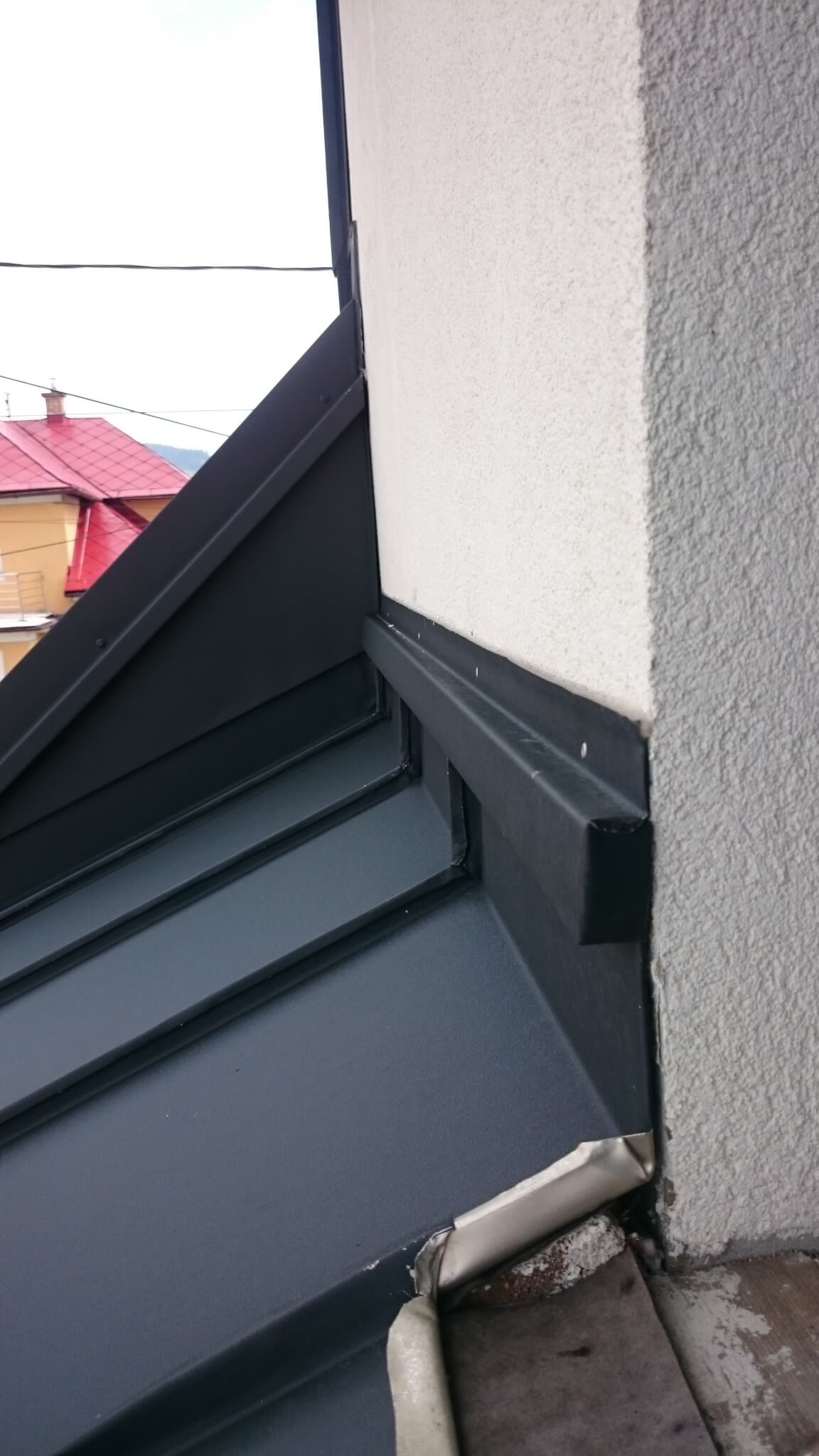
Another critical detail in house insulation is the connection of the facade to sheet metal — for example at windows, terraces or chimneys. Many contractors simply seal this joint with silicone. The problem? Silicone is only a temporary solution.
Silicone degrades after 2–3 years, cracks and allows water to seep in. The result is damp walls and additional costs.
The correct solution is the termination profile for sheet metal no. 3749, which:
- Ensures a watertight joint capable of withstanding sheet metal movement
- Eliminates the need for silicone
- Guarantees waterproofing for the entire lifetime of the structure
- For contractors, it eliminates warranty claims at these locations
This applies equally to chimney sheet metal — the roof structure moves, so a watertight joint at the chimney is an absolute necessity.
3. Termination Profile with Mesh — Preventing Cracks at Wooden Elements
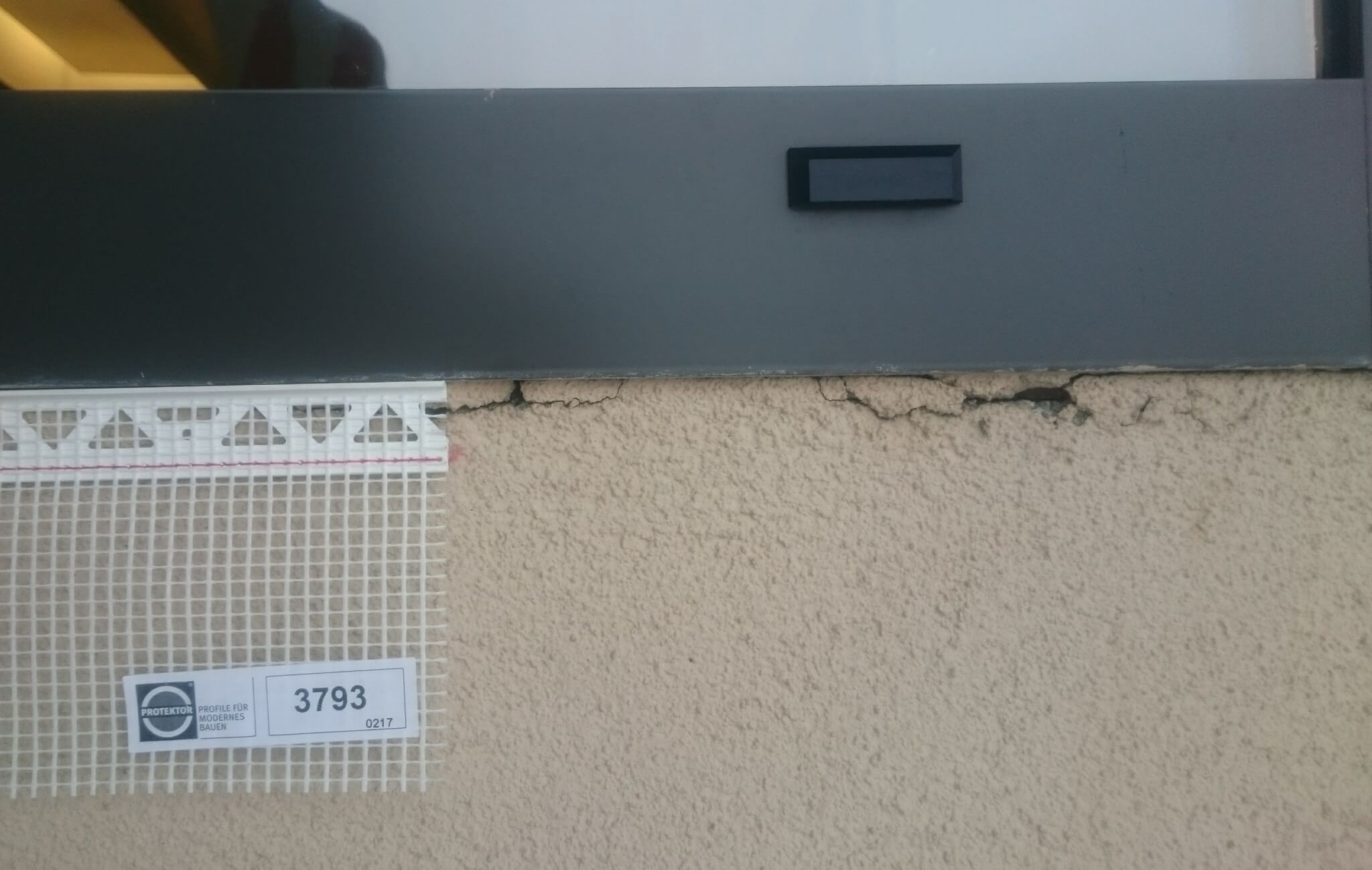
Protruding wooden elements on the facade — roof soffits, wall plates — are another area where problems arise without the correct detail. When plaster is applied, these elements get dirty, and worse still, cracks form at the junction of wood and plaster.
The cause is the different thermal expansion of wood and plaster. Wood moves, plaster does not — and the joint cracks.
Termination profile with mesh no. 3793 solves both problems at once:
- Separates the wooden element from the plaster with a fine gap
- Prevents crack formation
- Protects the wooden element from getting dirty during installation
- The result is aesthetic and durable
4. Anchoring the Dimple Membrane — A Detail That Must Not Be Underestimated

The dimple membrane plays an important protective and drainage role in insulation. But if it is not properly anchored, it peels away and stops fulfilling its function — the polystyrene is left unprotected and the membrane gets damaged.
The solution is integrating the cover strip under the base profile, which reliably anchors the dimple membrane. The correct assembly includes:
- Base profile — the foundation of the entire detail
- Anchoring cover strip — fixes the dimple membrane and also ensures ventilation and drainage function (front side of profile 4 cm)
Without this detail, polystyrene degradation and loss of protection for the entire insulation system is at risk.
5. Exterior Corner Profile with Nose — Straight Lines and Clean Transitions
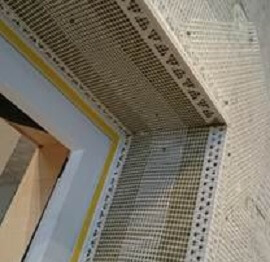
Wherever two different surfaces or colours meet on the facade, a clean and straight termination is needed. Without a profile, exterior corners are jagged, transitions are irregular, and the entire facade installation looks poor quality.
Exterior corner profile with nose solves this problem elegantly — the nose of the profile creates a sharp line between surfaces (e.g. white vs. grey textured facade) and also protects the corner from mechanical damage.
Correct Facade Installation — Summary of Key Profiles
| Facade Detail | Correct Solution | What Happens Without It |
|---|---|---|
| Lintels, cornices, balconies | Drip edge profile no. 3794 | Water runs down facade, plaster peels |
| Connection to sheet metal | Termination profile no. 3749 | Silicone cracks, water leaks |
| Wooden elements on facade | Termination profile with mesh no. 3793 | Cracks at junction |
| Dimple membrane | Anchoring with strip under base profile | Polystyrene degradation |
| Exterior corners and transitions | Corner profile with nose | Jagged, poor quality corners |
Conclusion: Invest in Details — Save on Repairs
House insulation and facade renovation are lifetime investments. The cost of profiles and correct details is a fraction of the total expense — but their absence can double repair costs.
Don’t let your contractor convince you that profiles are unnecessary. You are the homeowner and investor — you have the right to demand correct solutions. Silicone is always just a temporary patch. Correct profiles are a solution for decades.
Do you have questions about facade installation or house insulation?