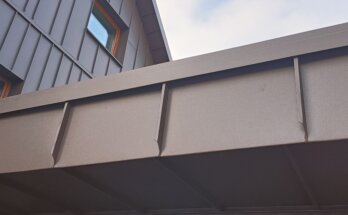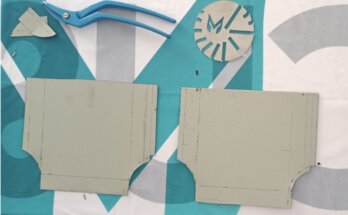

I have decided to process another extensive report on errors caused by improper implementation and underestimation of elementary installation instructions. This text will not judge or condemn, but rather encourage both the contractor to avoid these mistakes and, above all, the client not to allow an incompetent company to carry out the work.
We have processed these errors:
- Torn strips of standing seam roofing
- Fatal errors in the use of trapezoidal roofing on a family house roof
- Completely failed details in the installation of CLIP roofing
- Aesthetic problems with steel roofing caused by paint peeling
- Water leaking into the roof through the flashing of the roofing and perimeter roof
- Long-term refusal to solve roof leakage will trigger the rotting process of the roof structure
- Incorrectly clad chimney will damage the roof
Publishing these errors is all the more important so that investors do not focus solely on the final price in the offer, but instead first inquire about references and recommendations for the company that will install their roof. It is necessary for the discussion about the competence of companies to also be complemented by sellers of roofing materials, as well as designers and construction supervisors.
Fatal errors in the use of trapezoidal roofing on a family house roof
In this article, I will not discuss whether the use of standing seam roofing on a roof with a habitable attic is suitable or not. Assuming the investor was informed of this, I will focus on the incorrect implementation of details during the installation of this roofing. We can say with a clear conscience that on the mentioned roof, it is not a matter of which detail is incorrect. Quite the opposite. On the mentioned roof, we will not find a single correct detail. The key errors are:
- use of bitumen seals around roof penetrations
- incorrect ridge flashing
- installation of lightning rod in violation of all standards
- aesthetic errors
- use of different shades of roofing and sheet metal elements
- unsuitable white sealant
- use of farmer screws
Fatal errors in the use of trapezoidal roofing on a family house roof


Completely failed details in the installation of CLIK roofing
Completely failed details in the installation of CLIK roofing by a company that had absolutely no authorization to install this type of roofing. On one hand, the installation of KLIK roofing has its specifics, and on the other hand, a company that lacks both qualification and basic professional instinct can cause enormous damage. The use of farmer screws also has its specifics, and by placing them where they absolutely should not be, the installer caused very significant damage that resulted in unnecessary costs for the investor. The entire roof had to be dismantled, as the leaking water caused through the unmanaged details caused major damage to the roof structure.
The errors include:
- incorrect use of farmer screws
- incorrect chimney flashing
- incorrect valley connection


Aesthetic problems with steel roofing
In this post, we will show you the aesthetic defects of sheet metal roofing. The problem here was with the surface treatment of the roofing, where after a certain period of time it began to change its properties and the lacquer-plastic coating of the galvanized sheet began to peel off, creating aesthetic problems with the steel roofing caused by paint peeling.
In this case, the fault was not with the installer, but with the roofing manufacturer itself. They used materials of insufficient quality in the production process. This is why it is important to demand all necessary certificates from the manufacturer and supplier of the roofing, which guarantee the quality of the installed roofing. These are important in the event of a warranty claim for the surface treatment. On the other hand, the installer must be authorized to install the supplied roofing and must be familiar with all the necessary manufacturer’s installation instructions.
If this is not secured before installation — for example through a work contract or the presence of a construction supervisor during roof installation — it is the investor who ends up holding the short end of the stick. Avoid these mistakes!


Torn strips of standing seam roofing
Torn strips of standing seam roofing is an error that arose from poor installation of standing seam roofing. At first glance, it is clear that there were two fundamental errors on the roof: poor ventilation of the shed roof and the use of very long strips of standing seam roofing without the use of sliding clips. The consequence of this error is transversely torn strips and subsequently complete rot of the roof boarding. These errors meant that the roofing had to be dismantled and an entirely new roof had to be installed.


Water leaking into the roof through the flashing of the roofing and perimeter roof
Water leaking into the roof through the flashing of the roofing and the perimeter roof. I recommend using a termination profile for flashing. This is also an error that occurs during renovations or subsequent flashing to a facade from a contact thermal insulation system. The side flashing is best implemented with a termination profile for flashing, because the use of silicone in these areas is unsuitable. Particularly because silicone has a limited lifespan and degrades under UV radiation, after which water begins to seep along the facade into the roof structure.


An incorrectly clad chimney will damage the roof
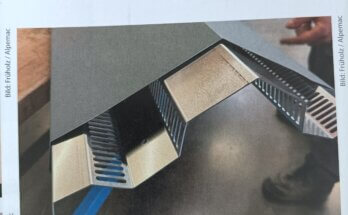
It is also important to remember the ventilation of the chimney, which can cause damage to the roofing. Every qualified sheet metal worker knows this detail and will implement it so that the roof is in good condition. If the chimney is clad, it must be ventilated. Sheet metal workers know how, but this aluminum perforated profile can also be used.
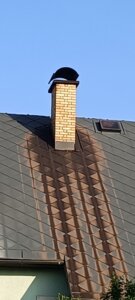
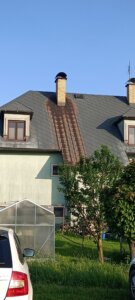
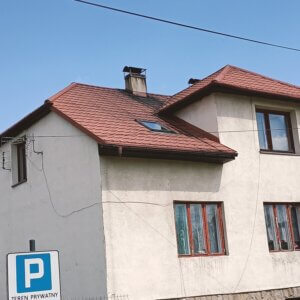
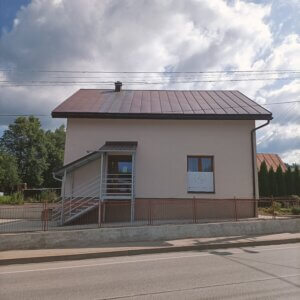
Incorrectly processed penetrations
In the gallery, I present improperly processed details that have no place on a roof. It is a cross-section of errors that I mentioned in the previous lines of this article. Look through them and encourage investors to be wary of companies that cause such mistakes on roofs.
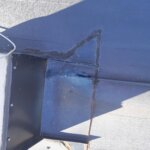


Defect on a trapezoidal sheet metal roofing
During this roof dismantling, it is also possible to highlight why trapezoidal roofing is not suitable for buildings with habitable attics. Leakage through farmer screws and subsequent condensation from the underside of the roofing caused absolute destruction to the roof truss structure and wooden boarding. Unfortunately, the property owner suffered the most, as the roof had to be completely replaced after 8 years of use.


Condensed water on sheet metal roofing
For an illustration of what condensation of water on the underside of the roofing looks like and its subsequent dripping down the roof truss structure, see the attached gallery. This makes it possible to appreciate the importance of other materials in the roof structure, particularly in the form of a secondary waterproofing membrane, whose main role is to capture and prevent water from entering the structure and the thermal insulation of the roofing.

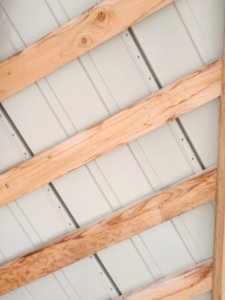


Long-term refusal to solve roof leakage will trigger the rotting process of the roof structure
Long-term refusal to solve roof leakage will trigger the rotting process of the roof structure.


The errors listed here are merely a sad acknowledgment of improperly installed roofs. If you can, share this article with everyone who is interested in roof renovation. It is essential to learn from this and prevent the construction of roofs with so many deficiencies.
Complete gallery



Video
Those who still refuse to believe that such errors occur on roofs, watch the videos where the mentioned roof defects are better visible.
I believe the article has enriched you and I trust that such mistakes will not occur on your roof. I would appreciate it if you send us your experience simply by leaving a comment on this post.